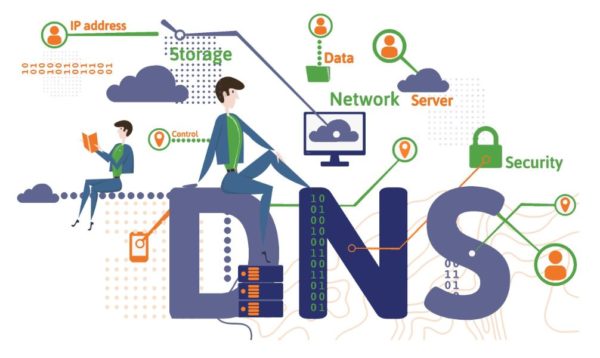
DNS Servers: What They Are and How They Work.
The universe of technological services is very wide and with many names, all of them are part of a large gear that processes a high volume of traffic and information every second, in the following lines we briefly explain about DNS Servers What They Are and How They Work.
A DNS server is a computer server that contains a database of public IP addresses and their associated host names, and in most cases it serves to resolve, or translate, those names to IP addresses as requested. DNS servers run special software and communicate with each other using special protocols.
Purpose of DNS servers
It's easier to remember a domain or host name like x5servers.com than the numbers in a site's IP address. So, when you access a website, like x5 servers, all you have to write is the URL https://www.x5servers.com.
However, computers and network devices do not work well with domain names when trying to locate themselves on the Internet. It is much more efficient and accurate to use an IP address, which is the numerical representation of which server on the network (the Internet) the website resides.
How does DNS work?
Well, a DNS is like a sophisticated and evolved address book for the Internet, but how does it work? .. we tell you ...
The DNS directory is not in a physical place, not even in a corner of the vast Internet. It is distributed around the world and is stored on many different servers that communicate with each other to provide regular updates, information and redundancies.
DNS information is shared among multiple servers, but it is also cached locally on individual computers and devices. This prevents users' computers from having to query the name server for the most commonly used IP addresses each time. The result is much higher efficiency.
In total, there are four different DNS servers involved in loading a web page (assuming it is not already cached on the user's computer or device):
DNS Recursor. This server is similar to that of a librarian tasked with finding a specific book in a library. This server is specifically designed to manage queries directly from client machines through web browsers (and other similar applications).
Root name server. This server translates human-readable host names - web URLs - into IP addresses. It is basically the translator.
TLD name server. This server is responsible for classifying websites based on their type. It is the last part of the domain name. The different TLDs include .com, .org, .net, etc.
Authoritative name server. The fourth and last server involved in loading a web page is the authoritative nameserver. If this server has access to the record that the user's query is requesting, the IP address will be delivered to the DNS recursor that made the original request.
DNS history
When the Internet was very, very small, it was easier for people to match specific IP addresses with specific computers, but that didn't last long as more devices and people joined the growing network. It is still possible to type a specific IP address into a browser to reach a website, but then, as now, people wanted an address made up of easy-to-remember words, the kind that we would recognize today as a domain name (like x5servers. com).
In the XNUMXs and early XNUMXs, those names and addresses were assigned by one person, Elizabeth Feinler of Stanford, who kept a master list of all computers connected to the Internet in a text file called HOSTS.TXT.
Obviously, this situation was untenable as the Internet grew, not least because Feinler only responded to requests before 6 p.m. California time and took a Christmas vacation. In 1983, a Paul Mockapetris, a researcher at USC, was tasked with reaching a compromise between the multiple suggestions to solve the problem. He basically ignored them all and developed his own system, which he called DNS. Although it has obviously changed quite a bit since then, at a fundamental level it still works the same as it did almost 40 years ago.
DNS are services that, although invisible, are of vital importance for the functioning of the internet and the websites published all over the world.